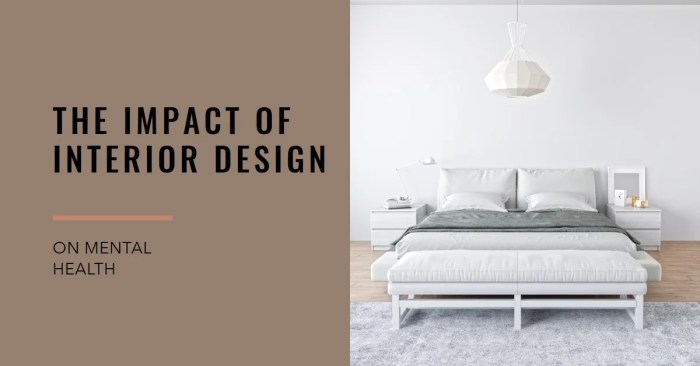
Exploring the profound impact of interior design on mental health at home, this piece delves into the intricate relationship between our living spaces and our well-being. By shedding light on the connection between design elements and mental wellness, readers are invited to uncover the transformative power of a thoughtfully curated home environment.
Delving deeper into the nuances of color psychology, lighting considerations, and the importance of organization, this exploration promises to unveil the secrets to creating a sanctuary that nurtures both body and mind.
Importance of Interior Design in Mental Health
Interior design plays a crucial role in impacting mental health by creating spaces that can either promote well-being or contribute to stress and anxiety. The design elements within a space can have a profound effect on our emotions, mood, and overall mental state.
Use of Natural Light
- Natural light has been proven to boost mood and increase productivity, making it essential in promoting positive mental health.
- Spaces that are well-lit with natural light can help regulate our circadian rhythms, leading to better sleep patterns and overall well-being.
Color Psychology
- Colors have the ability to evoke different emotions and affect our mental state, making them a powerful tool in interior design.
- Warm colors like yellow and orange can create a sense of comfort and happiness, while cool colors like blue and green can promote relaxation and calmness.
Decluttered Spaces
- A cluttered environment can lead to feelings of overwhelm and stress, impacting our mental health negatively.
- Well-designed spaces that are free of clutter can create a sense of calm and clarity, promoting a positive mindset.
Color Psychology in Interior Design
Color plays a crucial role in interior design as it can have a significant impact on mood and mental health. Different colors evoke various emotions and can influence our overall well-being.
Influence of Different Colors
Here are some examples of how different colors can affect mood and mental health:
- Blue:Known for its calming and soothing properties, blue is often used in bedrooms and living rooms to promote relaxation and reduce stress.
- Green:Associated with nature, green can create a sense of tranquility and harmony, making it ideal for spaces where relaxation is key.
- Yellow:A cheerful and energizing color, yellow can boost mood and create a sense of warmth and positivity in a room.
- Gray:Gray tones can convey a sense of sophistication and calmness, perfect for creating a serene and elegant atmosphere.
- White:Symbolizing purity and cleanliness, white can make a space feel spacious, airy, and peaceful.
Creating a Calming Environment with Color Schemes
When designing a space to promote mental well-being, consider incorporating calming color schemes such as:
- Soft Neutrals:Beige, ivory, and light gray tones create a soothing and relaxing environment.
- Pastel Colors:Soft shades of blue, green, and lavender can evoke a sense of serenity and tranquility.
- Earth Tones:Warm hues like terracotta, olive green, and rust can bring a grounding and comforting feel to a room.
Role of Natural Elements
Natural elements like plants can also play a significant role in enhancing mental well-being in interior spaces. Plants not only add visual appeal but also improve air quality, reduce stress, and boost mood. Incorporating greenery into your design can create a connection to nature and promote a sense of calmness and relaxation.
Lighting and Mental Health
Lighting plays a crucial role in influencing our mental health and well-being within interior spaces. It can affect our mood, energy levels, and overall mental state.
The Importance of Natural Light
Natural light is vital for our mental health as it helps regulate our circadian rhythm, which in turn affects our sleep patterns and mood. To optimize natural light in your home:
- Ensure windows are unobstructed to allow maximum sunlight to enter.
- Use light-colored curtains or blinds that can still let light through while providing privacy.
- Position work or relaxation areas near windows to benefit from natural light exposure.
- Consider using light-reflecting surfaces like mirrors to amplify natural light in darker areas.
Impact of Artificial Lighting
Artificial lighting can also impact our mood and mental health. Poor lighting conditions, such as harsh fluorescent lights or dimly lit spaces, can contribute to feelings of fatigue, irritability, and even depression. To improve artificial lighting in your home:
- Choose warm or cool-toned LED bulbs that mimic natural light and are easy on the eyes.
- Use task lighting in areas where focused light is needed, such as reading nooks or workstations.
- Consider installing dimmer switches to adjust lighting levels based on the time of day or activity.
- Avoid glare by positioning light sources away from reflective surfaces like computer screens or glossy furniture.
Organization and Clutter Management
Maintaining an organized and clutter-free home environment is crucial for promoting mental well-being. Clutter can have a significant impact on mental health and productivity, leading to increased stress and anxiety.
Effects of Clutter on Mental Health
- Clutter can overwhelm the mind and create feelings of chaos and disorganization.
- Living in a cluttered space can lead to difficulty focusing and completing tasks.
- Excessive clutter can trigger feelings of anxiety and make it challenging to relax and unwind.
Strategies for Organizing Spaces
- Start by decluttering and getting rid of items that are no longer needed or used.
- Implement storage solutions such as bins, shelves, and organizational systems to keep items neatly stored away.
- Create designated spaces for specific items to make it easier to find and access them when needed.
Benefits of a Well-Organized Home
- A well-organized home promotes a sense of calm and relaxation, reducing stress and anxiety levels.
- Organized spaces can increase productivity and focus, making it easier to accomplish daily tasks.
- An organized home can improve overall mental well-being by creating a peaceful and harmonious environment.
Final Wrap-Up
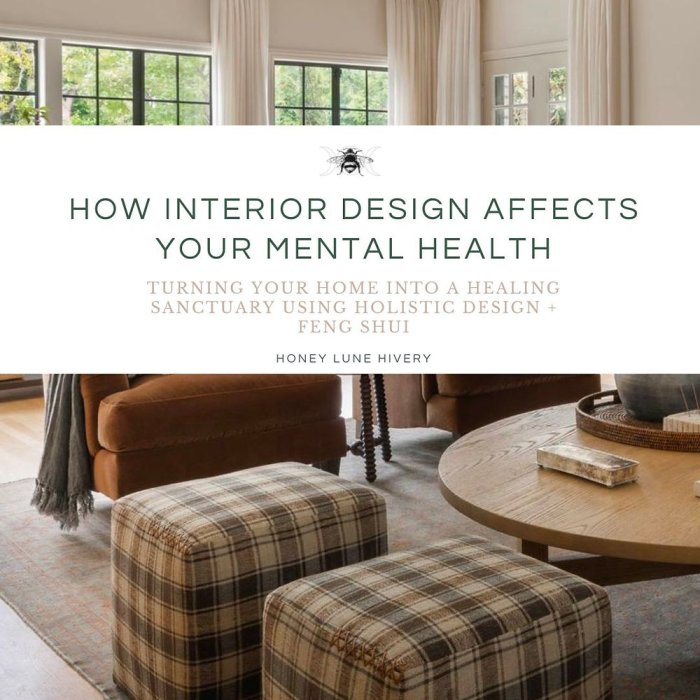
In conclusion, the fusion of design principles and mental health considerations opens up a realm of possibilities for cultivating a harmonious living space that uplifts and restores. By embracing the insights shared in this discussion, individuals can embark on a journey towards a more balanced and fulfilling lifestyle within the walls of their homes.
FAQ Insights
How does color psychology impact mental health in interior design?
Color psychology in interior design plays a significant role in influencing mood and overall well-being. Warm colors like yellow and orange can evoke feelings of happiness and energy, while cool tones such as blue and green promote calmness and relaxation.
By strategically incorporating these colors into living spaces, individuals can create environments that support their mental health needs.
What are some tips for optimizing natural light in a home for better mental well-being?
To optimize natural light in a home, consider using light-colored curtains or blinds that allow sunlight to filter through easily. Additionally, placing mirrors strategically can help reflect and distribute natural light throughout the space. Keeping windows clean and unobstructed also maximizes the benefits of natural light, contributing to a brighter and more uplifting atmosphere.
How does clutter affect mental health and productivity?
Clutter can create feelings of overwhelm, stress, and anxiety, leading to decreased productivity and a sense of unease. By implementing effective organization strategies and decluttering regularly, individuals can promote a sense of calm and order in their living spaces, which in turn positively impacts mental well-being and enhances productivity levels.